
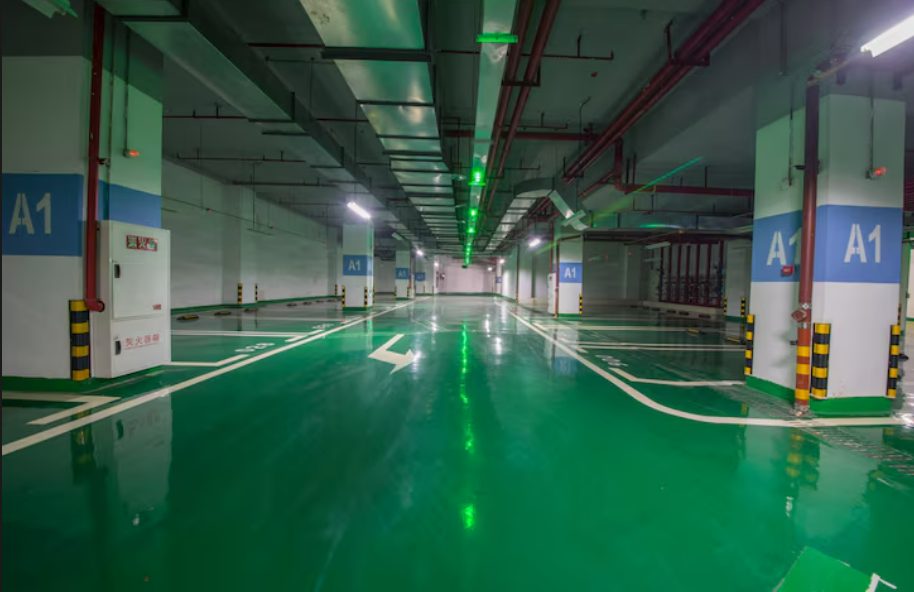
 By slip_guard_new_admin
The floor is always last.
The equipment has been replaced. The walls repainted. And somewhere on the list that keeps getting pushed: do something about the floor. Meanwhile it is swept every morning and slowly losing a battle nobody is watching.
It usually takes something visible. The grey powder near the loading bay that reappears no matter how often you sweep. The crack you stepped over for two months. The moment someone’s foot slid on the wet patch near the dock door and, thankfully, nothing happened.
That last one is the one that moves floors up the priority list.
This guide is for anyone who has arrived at that moment. What is happening to the concrete beneath you, why non slip epoxy floor coating addresses it in a way that cleaning and patching cannot, and how to make sure the job gets done properly rather than just visibly.
The Floor You Think Is Stable Is Being Quietly Dismantled
Concrete is porous. That is not a flaw — it is simply what concrete is. The micro-voids left when the mixing water evaporated during curing do not cause problems in themselves. What moves through them does.
Water enters from above through spills and from below through capillary action, carrying dissolved salts and minerals into the pore structure. When it evaporates, those compounds crystallise and expand inside the concrete — forcing it apart from within. Incrementally. Over months and years, that produces the pitting and spalling that looks like wear damage but is structural disintegration from the inside out.
Oil, fuel, and cleaning solvents penetrate uncoated concrete easily and react with the cement binder. Once the binder weakens in one area, surrounding sections carry more load and fail faster.
Traffic provides the abrasive force. Every boot and wheel carries particles that grind the cement paste. The floor loses its surface layer gradually, aggregate gets exposed, cleaning gets harder, and contaminants accumulate in the roughened surface — accelerating both the chemical and abrasive damage.
None of this announces itself. By the time the floor starts communicating the problem loudly, the conversation about treatment is significantly more expensive than it needed to be.
Plain Epoxy Looks Like the Answer. In Wet Conditions, It Makes Things Worse.
When a two-part epoxy system cures, it penetrates the pore structure and bonds mechanically with the substrate. The coating becomes part of the floor. This is why a properly applied non slip epoxy floor coating does not peel at the edges after a few seasons, does not bubble when moisture moves through the slab, and does not fail in patches the way surface sealers do.
Once bonded and cured, epoxy is impermeable to water, resistant to chemicals, and harder than the cement paste it covers. It seals the pore structure, resists the chemical attack that was degrading the binder, and protects the surface from abrasive wear — the mechanisms through which the coating adds years, sometimes decades, to the service life of the concrete beneath it.
Here is the part that surprises almost everyone. A standard epoxy coat, once cured, produces a smooth, glassy surface. That surface is more slippery than bare concrete when wet — not marginally, significantly. The floor looks sealed and professional. In wet conditions it is a worse hazard than what you had before. This is not a minor detail. This is why anti slip epoxy is not an optional upgrade. It is the correct specification. Plain epoxy in any environment that sees moisture is an incomplete job.
Proper anti skid epoxy flooring incorporates aggregate — aluminium oxide, quartz, or silicon carbide — broadcast into the wet epoxy and permanently bonded as it cures. The textured profile provides grip regardless of wet, oil, or contamination. You cannot see the texture from a distance. You feel it immediately underfoot. Because the particles are locked into the coating, the texture is permanent.
Your Floor Has Been Trying to Tell You This for a While
Facilities develop a relationship with their floors that involves learned helplessness. The dusting is part of the routine. The crack is “just cosmetic.” The slippery patch is “just something people know about.” Each accepted as permanent rather than read as a signal. They are signals.
• Dusting — grey powder after sweeping or traffic means the cement paste is actively degrading; the floor is losing material with every pass
• Pitting — small craters where moisture cycling or chemical attack has done structural damage; each pit accelerates the damage around it
• Hairline cracks — not structurally serious individually, but each one is an open channel for moisture and chemicals to penetrate deeper into the slab; hairline cracks that are not addressed become significant cracks
• Staining that does not clean out — oil and mineral stains that have gone below the surface layer mean the pore structure is completely open; the floor is absorbing everything it contacts
• Slippery patches near drains or entrances — wet concrete is a hazard; a wet plain-epoxy surface is measurably worse; both are telling you the floor needs treatment
• Previous coating that is flaking or delaminating — usually moisture vapour pressure from below or inadequate preparation; the coating failed, not the floor
Not one resolves on its own. Every one compounds. Treatment now costs a fraction of what it costs once the damage reaches the structural layer.
What Good Application Looks Like. And the One Step Where Most Jobs Fail.
The chemistry inside a non slip epoxy floor coating is well understood and reliable. The preparation phase — before any coating is applied — is where the gap between a floor that lasts ten years and one that fails at eighteen months is entirely created.
The surface must be mechanically profiled through grinding or shot blasting — not sanding alone. This removes the laitance layer (the weak, dusty film on concrete as it cures) and opens the pore structure to a depth the epoxy can grip. Without this, the epoxy bonds to the laitance. The laitance releases. The coating comes with it. A preparation failure — the most common reason epoxy floors fail prematurely.
Moisture content must be measured before coating. High moisture vapour emission pushes a coating off the substrate from below regardless of preparation. A contractor who does not mention this is either skipping the test or hoping you do not ask. The test takes minutes. Failing to test costs the entire job, done again.
For an anti-skid system, there is one additional step that requires genuine skill: the aggregate broadcast. Particles are distributed into the wet build coat by hand, evenly, across the entire surface. Too sparse and the traction profile is inconsistent. Too dense and the peaks trap contamination. The right distribution is calibrated by experienced applicators using physical judgment. It cannot be rushed and cannot be fixed after the coating cures.
The finished floor is tested with a tribometer against a target friction coefficient. The result is a number, not a feeling. A floor that has been measured and documented is a different category from one that was eyeballed and called good.
Three Specific Reasons the Coating Adds Years to Your Floor
The life extension from non slip epoxy floor coating is not a general claim. It comes from three specific mechanisms that change what the concrete beneath the coating is exposed to.
Moisture exclusion. Once epoxy has cured and bonded, water cannot enter the slab from above. The spalling cycle stops at the coating surface. In wet environments, the difference between coated and uncoated concrete of the same age is visible within a few years.
Chemical resistance. The oils, solvents, and acids that were degrading the cement binder now contact the epoxy and stop. Cleaned off without residue. The chemistry that was attacking the concrete never reaches it.
Abrasion resistance. The cured epoxy is substantially harder than the cement paste it covers. Abrasive particles that were grinding the surface layer away now ride across it without removing material. The floor stops dusting. Surface profile is maintained.
The aggregate in anti slip epoxy reinforces this at the highest-wear points. Aggregate particles are harder than the epoxy matrix, so the peaks — the points that contact boots and wheels most directly — are the most abrasion-resistant parts of the floor. Grip and durability come from the same feature.
The Questions That Tell You Whether a Contractor Actually Knows What They Are Doing
There is a wide range of quality in non slip epoxy floor coating work, and most of the variation is invisible on the day of completion. The floor that was properly prepared and the floor that had corners cut look similar when the coating is fresh. They look very different at the eighteen-month mark. These are the questions that distinguish them before you commit.
What is the solids content? High-build epoxy at 70–90% solids provides genuine protective thickness. Thin-film systems sold as epoxy floor coating provide cosmetic coverage. Not the same product. Ask for the product data sheet. A professional hands it over without hesitation.
What aggregate and why? Aluminium oxide, quartz, and silicon carbide have different hardness and wear profiles. The right choice for a commercial kitchen is different from a vehicle workshop. Same aggregate everywhere is not a considered decision.
How are you handling moisture? Not “are you testing” — that is too easy to answer yes. Ask what method and at what threshold they would change the system. The answer reveals whether moisture management is genuinely part of their process.
Does the finished floor come with a friction certificate? Look for a provider with Friction Testing & Issue Certificate Expert credentials and recognised as Anti Slip Floor & Tile Treatment Solution specialists. A certified friction coefficient means the floor’s safety performance is documented — for insurance, compliance, and the confidence of knowing the number rather than estimating the feel.
What does the warranty cover? Coating integrity and slip resistance performance over a defined period — not just material defects.
There Is No Neutral. The Floor Is Either Being Maintained or Being Consumed.
This is not a dramatic statement. It is what happens to unsealed concrete. Moisture, chemicals, and traffic do not pause while the decision is deferred.
A properly applied non slip epoxy floor coating changes the physics. The moisture cycle stops at the surface. The chemical attack stops. The abrasive wear rate drops significantly. The floor that was trading condition for time starts holding its condition.
Coating costs significantly less than repairing a floor allowed to degrade past recovery. Every year of deferred maintenance narrows the gap between coating and replacement. At some point the gap closes entirely.
Find someone who will look at the actual floor — test the moisture, measure the profile, identify the contamination, specify a system for what is specifically there. Not a phone quote.
The floor has been communicating its condition for a while. Cheaper to listen now than later.
The Questions Underneath the Questions
What gets asked at consultations. And the thing behind each question that usually does not get said.
Can epoxy be applied over a coating that is already failing?
Underneath this question is almost always: I really do not want to pay for stripping the old coating. The answer depends on why the coating is failing. Poor preparation: new epoxy bonds to the same weak layer and inherits the same failure. Moisture vapour delamination: adding a layer traps the moisture further. In both cases, mechanical removal and proper preparation is correct. It costs far less than doing the job twice.
How long does a non slip epoxy floor coating actually last?
In light to moderate traffic, a properly applied high-build system lasts seven to ten years. In heavy industrial use, five to seven years is realistic. The factor that most shortens coating life is not traffic — it is cleaning with incompatible products. Ask your applicator which products are safe. That conversation at the start saves a great deal of confusion later.
The floor has years of oil contamination. Is it too far gone to coat?
No, but oil contamination requires a different preparation approach. A contractor who does not acknowledge this in their scope is not acknowledging the problem. Oil that has penetrated the pore structure cannot be removed by surface cleaning. It requires mechanical removal of the contaminated layer or a specific degreasing protocol followed by verified dry time. If any residual oil remains when epoxy is applied, it migrates to the bonding interface and causes delamination — months later, when everyone has moved on. Before you sign anything: ask what the contractor’s plan is for the existing oil.
We want to use this on an outdoor area. Does anti skid epoxy flooring work outside?
Epoxy alone does not perform well outdoors. UV radiation causes yellowing, chalking, and coating degradation. The correct system for exterior concrete is epoxy as the base layer with a polyurethane or polyaspartic topcoat for UV stability. Aggregate is broadcast into the build coat before the topcoat, locking traction in permanently. A single-product epoxy outdoors looks fine for six months and then begins failing visibly. Ask specifically: is this system rated for exterior UV exposure?
What friction level does anti slip epoxy actually achieve?
Most pedestrian floor standards target a DCOF of 0.42 or above for level surfaces, higher for ramps and wet use areas. A properly specified anti skid epoxy flooring system typically achieves DCOF values between 0.55 and 0.75. These values are measured with a calibrated tribometer and the result is recorded and certifiable. If a contractor cannot give you a projected friction coefficient for the system they are proposing, ask why performance measurement is not part of their process.
How disruptive is the application? We cannot shut the facility down.
Less than most people expect, if properly sequenced. Preparation takes one to two days; coating application another one to two days. Light foot traffic is possible after twenty-four hours; full load after three to five days at full cure. For large facilities, phased application keeps most of the floor operational throughout. The one thing that creates unmanageable disruption is returning a floor to service before it has cured. Forklift traffic on under-cured epoxy leaves tyre marks bonded permanently into the surface. That is not a repair. It is a redo.
We had epoxy done two years ago and it is already showing serious wear. What went wrong?
Two years is not close to a normal lifespan. Premature failure comes back to one of three things: inadequate preparation (laitance not removed, moisture not tested), the wrong system for the environment (thin-film where high-build was required), or incompatible cleaning products attacking the coating over time. Establish which caused the failure before recoating. Recoating without changing the cause produces a floor that fails on the same schedule.
 by
by
Leave A Comment