
 By slip_guard_new_admin
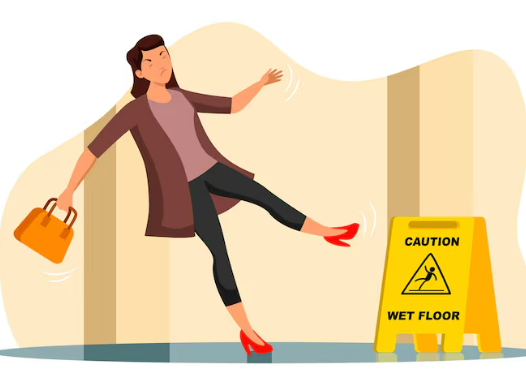
The most dangerous ten square feet of your commercial property is directly inside the front door. Architects routinely design these entrance zones to impress visitors with high-gloss marble or polished granite, completely ignoring the basic physics of a rainy day. When wet shoes meet smooth stone, you are no longer operating a lobby; you are operating a liability trap. Every time it rains, severe slip hazards manifest instantly at your threshold.
The transition zone reality
There is a fundamental misconception that keeping a floor looking perfectly clean means keeping it safe. A spotless, highly polished entrance is biologically satisfying but mechanically disastrous when moisture is introduced. The entrance area acts as a transition zone where the abrasive dirt and water from the street directly hit your smooth indoor flooring.
Your visitors do not wipe their feet perfectly. They track in water, oil, and fine silica dust from the pavement outside. This exact combination creates an invisible slurry that dramatically reduces the friction coefficient of the floor. Effectively managing these slip hazards requires accepting that your lobby is an industrial threshold, not just an aesthetic showroom.
A glossy lobby is a controlled environment right up until the moment the weather changes.
You must stop treating your entrance like an interior hallway.
The matting illusion and trapped moisture
Most facility managers attempt to solve wet floors by throwing down heavy rubber-backed mats at the front door. I recently reviewed a corporate headquarters that relied entirely on a massive, expensive entrance mat during a severe storm. The mat quickly became saturated, and the water simply bled out the edges onto the polished porcelain tile beneath. Visitors stepped off the soaked mat directly onto a puddle resting on smooth glass-like tile, resulting in two immediate ambulance calls.
Mats do not eliminate the problem; they merely relocate the water. When moisture gets trapped under a heavy rubber mat, it slowly ruins the flooring substrate and creates a breeding ground for mold. Relying on temporary rugs is a lazy approach to slip trip and fall prevention.
You need a permanent mechanical solution, not a temporary sponge.
The failure of an entrance mat creates a false sense of security that actually increases pedestrian speed before a fall.
Temporary fixes guarantee permanent liabilities.
Modifying the substrate chemistry
If your entrance relies on temporary fixes, you are exposed to constant risk. The most effective way to secure this zone is to alter the physical grip of the floor itself. You do not need to tear out the expensive marble to achieve this.
By applying a dedicated Anti Slip Floor & Tile Treatment Solution, you change how the stone reacts to water. This chemical process etches microscopic valleys into the surface of the tile. When a wet shoe presses down, the water is forced into these invisible pores, allowing the rubber sole to lock onto the hard peaks of the stone.
This intervention specifically targets the microscopic geometry of the floor, neutralizing slip hazards without altering the visual presentation of your lobby.
Grip is dictated by microscopic porosity, not visual dullness.
Physics will always outperform a wet mop.
Establishing baseline friction metrics
Assuming your entrance is safe based on a visual check is a profound management failure. When an injury claim lands on your desk, the insurance adjuster will ask for numerical proof of your surface safety. Claiming the floor looked dry is not a legally defensible statement in any jurisdiction.
You must hire a Friction Testing & Issue Certificate Expert to evaluate the exact dynamic coefficient of friction in your lobby. They will test the surface under wet and dry conditions using calibrated machinery. This generates hard data proving your floor meets commercial safety mandates.
Having this certified baseline is the cornerstone of proactive slip trip and fall prevention. It removes the guesswork from your facility management and provides an absolute legal shield against negligence claims.
Data is the only acceptable defense against an opportunistic liability claim.
Measure the risk before the risk measures you.
Cleaning protocols that destroy your grip
You can engineer the perfect entrance floor and watch your janitorial staff ruin it in a single evening. Most commercial floor detergents contain animal fats or synthetic polymers designed to leave a shiny residue. They are formulated to make the lobby smell like artificial pine and reflect overhead lighting.
This invisible, soapy film fills in the microscopic texture of your flooring. When a customer tracks rain across this residue, the resulting slip hazards are exponentially worse than just pure water on stone. You have essentially created a chemical ice rink directly inside your front doors.
| Floor State | Friction Level | Primary Danger |
| Dry and Clean | High | Minimal |
| Wet with Water | Moderate | Aquaplaning |
| Wet with Soap Residue | Near Zero | Complete loss of traction |
You must mandate the use of pH-neutral degreasers that evaporate without leaving any chemical film behind.
A floor that shines from soap residue is a lawsuit waiting for a rainy day.
Your cleaning crew must prioritize raw friction over a glossy finish.
Frequently Asked Questions
Why are entrance areas more dangerous than bathrooms?
Entrance zones experience rapid, unpredictable changes in moisture from weather and street debris, creating immediate slip hazards. Unlike a bathroom, which has a predictable water source and specific non-slip tiles, lobbies are usually designed for aesthetic impact with highly polished stone. Pedestrians also enter lobbies moving at a much faster walking pace than they do in a restroom.
How often should we test the friction of our main entrance?
High-traffic commercial entrances should be audited every six to twelve months. The abrasive grit tracked in from the street wears down the microscopic surface of your tile very quickly. Regular testing ensures your floor has not silently degraded below legal safety thresholds.
Do anti-slip treatments change the color of the lobby floor?
Microscopic chemical etching does not alter the pigmentation of the stone or ceramic. You might see a marginal reduction in the high-gloss glare on very dark tiles, but the visual pattern remains intact. The treatment alters the texture, not the dye.
Are heavy rubber mats completely useless?
No, but they are consistently misused. A proper matting system requires a rough scraper mat outside, an absorbent mat inside, and rigid daily maintenance. If you just drop a single rug inside the door and let it soak, you are actively creating severe slip hazards.
Does wet floor signage protect me from liability?
A yellow plastic sign is a temporary warning, not a permanent legal defense. If your floor remains dangerously slick for hours and you rely solely on a sign, a judge will still find you negligent. True slip trip and fall prevention requires actively fixing the mechanical hazard, not just pointing at it.
Securing your building’s entrance requires accepting that physics dictate safety, not interior design. You cannot control the weather or the footwear of the people walking through your doors, but you have absolute control over the mechanical grip of your floor. Addressing slip hazards proactively is a fundamental responsibility of property management.
Stop relying on saturated rugs and visual inspections to protect your business. Demand empirical data, optimize your surface chemistry, and enforce strict cleaning protocols.
 by
by
Leave A Comment