
 By slip_guard_new_admin
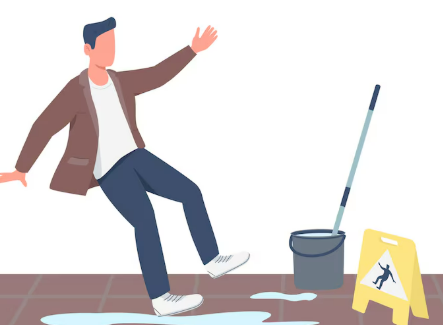
Most facility managers assess the safety of a floor by walking across it in dry rubber-soled shoes and guessing. People really do not understand physics. It costs a lot of money. The human foot is not good at measuring amounts of resistance. A floor can feel very safe when it is dry. It can become very slippery when it gets wet. You cannot look at a floor. Know if it is safe. Floors that feel safe when they are dry can be very dangerous when they get wet because a small amount of water can make the floor very slippery. You cannot trust your eyes to tell you if a floor is safe because physics of floors and water can be tricky. The physics of floors is important to understand because it can help you know if a floor is safe or not and the physics of floors is that a floor can be safe one minute and then not safe the next, like when water spills on the floor.
The mechanics of microscopic interaction
When you walk on a tile your safety depends on how the bottom of your shoe touches the floor. The way your shoe and the floor work together is really important. This is because when you step on the floor it creates friction. The friction is what stops your heel from slipping. If the floor is very smooth even tiny drops of liquid can make it very slippery. This is called an effect and it happens when the liquid, on the smooth floor makes it hard for your shoe to grip.
Water does not make a floor slippery. Water simply fills in the microscopic valleys of the surface material, lifting the shoe tread off the hard peaks. The physics are identical to a car tire hydroplaning on a wet highway. To maintain adequate floor friction, the peaks of your tile or concrete must be sharp enough and high enough to cut through that layer of moisture and grip the rubber.
Grip is not a feeling; it is a measurable mechanical lock between two textured surfaces.
You might assume that rough-looking natural stone is inherently safer than polished porcelain. This is a dangerous assumption. Many honed or textured stones have rounded microscopic peaks that offer zero lateral resistance when wet. A highly polished granite can actually be engineered with better wet grip than a rough slate, provided it has undergone the correct chemical treatment.
Why visual inspections fail you completely
Consider a regional logistics hub I audited last year. They spent eighty thousand dirhams installing a matte-finish concrete floor, assuming the dull texture guaranteed safety for their workers. In the dry summer months, it performed adequately. As soon as the rainy season introduced tracked-in moisture, they suffered four serious slip-and-fall injuries in a single week.
The problem was not the material; it was their reliance on visual assumption. They looked at the dull finish and equated it with grip. When we conducted formal slip resistance testing, the floor failed the minimum safety threshold by a massive margin. The microscopic pores were too shallow to displace even a millimeter of water. They were forced to retrofit the entire warehouse while facing pending litigation.
A visual assessment is a cosmetic judgment. Only calibrated mechanical testing provides a true legal and physical baseline.
If you do not have a numerical measurement of your floor’s grip, you are operating entirely on luck.
You need a Friction Testing & Issue Certificate Expert to evaluate the surface dynamically. They do not look at the floor; they measure the exact force required to push a specialized rubber slider across it under both wet and dry conditions. This data dictates your actual liability.
Decoding the measurements
When you commission professional slip resistance testing, you will receive a report detailing the dynamic coefficient of friction (DCOF). This number is the only thing standing between your business and a catastrophic negligence lawsuit.
| DCOF Value | Safety Classification | Typical Application |
| Below 0.42 | High Slip Potential | Strictly dry areas only |
| 0.42 to 0.60 | Acceptable / Conditional | General commercial lobbies |
| 0.60 and above | High Slip Resistance | Commercial kitchens, wet areas, ramps |
A DCOF of 0.42 is widely considered the absolute minimum standard for level walking surfaces that may occasionally get wet. If your commercial lobby tests at a 0.38, it is legally classified as an active hazard.
This measurement must account for the specific environment. A score of 0.45 is perfectly safe for a typical corporate office, but it is dangerously inadequate for a commercial kitchen or a sloped pedestrian ramp. You cannot apply a single standard across a complex facility.
The required friction coefficient scales directly with the environmental risk.
You must tailor your safety metrics to the specific use case of each room in your building.
The impact of maintenance on surface dynamics
You can install a floor with a perfect DCOF rating of 0.65 and completely destroy its safety profile within a month. Your janitorial staff is the biggest threat to your floor friction. Most commercial cleaning detergents are designed to leave a thin layer of synthetic wax or fat behind to make the floor shine and smell pleasant.
Over time, this invisible residue builds up, entirely filling the microscopic valleys that provide traction. We see this constantly in high-end residential homes and hotel lobbies. The owners invest heavily in safe materials, but the daily mopping routine turns the floor into a literal soap slick. When water hits this soapy buildup, the floor friction drops to near zero.
You must mandate the use of heavy-duty degreasers and pH-neutral cleaners that evaporate completely. Do not let your cleaning crew prioritize a glossy shine over the microscopic integrity of your surface.
A floor that smells like pine and shines like glass is often a floor covered in dangerous residue.
If your floor feels slick immediately after it has been cleaned, your maintenance protocol is actively destroying your safety investment.
Remediation and long-term strategy
When your slip resistance testing reveals a critical failure, you have to act immediately. Ripping up and replacing the tile is rarely the most cost-effective solution. You need an Anti Slip Floor & Tile Treatment Solution that chemically alters the existing substrate without requiring a massive demolition project.
These commercial treatments work by microscopic etching. They react with the silica in the tile or concrete to permanently deepen the microscopic valleys and sharpen the peaks. This restores the required floor friction without altering the visible color or adding a thick, peeling topical coating.
The goal is to permanently change the physics of the surface, not simply paint over it. Once the treatment is applied, you must establish a rigid schedule for follow-up testing. The abrasion of daily foot traffic will eventually wear down even the hardest treated stone.
Safety is an ongoing mechanical process, not a one-time installation.
You cannot treat a floor once and assume the liability is permanently handled.
Frequently Asked Questions
Can I test floor friction myself with a digital meter?
No. While you can buy consumer-grade friction meters, the results are legally meaningless and often wildly inaccurate. Proper slip resistance testing requires highly calibrated pendulums or tribometers operated by certified professionals. If an accident occurs, a court will only accept data generated by an independent, accredited expert using standard protocols.
Does slip resistance testing damage the floor?
No. The equipment uses standardized rubber sliders that mimic the sole of a shoe. The testing process simply drags this slider across the floor under measured weight. It leaves no marks, requires no drilling, and causes zero physical damage to your tile or concrete.
How often should a commercial floor be tested?
A high-traffic commercial environment, such as a shopping mall or a manufacturing floor, should be audited annually. If you implement a chemical treatment to improve grip, you must test it immediately upon completion, and then establish a baseline every 12 to 18 months to monitor the rate of wear.
Does increased floor friction make the floor harder to clean?
Yes, marginally. The same microscopic peaks that grip a shoe will also grip mop fibers and dirt more aggressively. Highly slip-resistant floors require specialized cleaning tools, such as microfiber flat mops or auto-scrubbers, rather than traditional string mops. You are trading a slight increase in cleaning difficulty for a massive decrease in legal liability.
You manage risk by understanding the mechanics of your environment. You cannot visually inspect your way out of a lawsuit.
Stop guessing about the safety of your walking surfaces and start measuring the actual physics beneath your feet.
 by
by
Leave A Comment