
 By slip_guard_new_admin
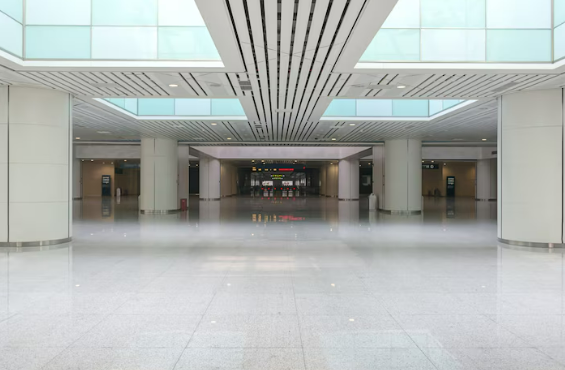
You walk into a high-end shopping mall on a rainy day and step onto a floor that looks like polished glass. Your brain instinctively braces for a slip and a fall. Yet, your wet shoes grip the surface perfectly. That glossy finish is a masterclass in engineered deception. You are walking on highly calibrated slip resistant flooring designed to look completely hazardous while remaining entirely safe.
Why glossy does not mean dangerous
The most common assumption in property management is that matte floors are safe and shiny floors are slippery. This is biologically intuitive but mechanically false. A mirror-like shine is simply the reflection of light off a uniformly flat surface. It has absolutely nothing to do with the microscopic coefficient of friction that dictates whether your boot stays planted or slides.
Facility directors achieve this aesthetic balance by altering the pore structure of the stone or porcelain tile. They utilize specialized chemical treatments that react directly with the silica in the flooring material. This controlled reaction creates microscopic peaks and valleys that remain entirely invisible to the naked eye.
True grip is found in the microscopic geometry of the floor, not in its visual dullness.
When moisture from a wet umbrella or a spill hits this treated surface, the microscopic valleys act like tiny suction cups under a shoe tread. The water is forced into the depressions, allowing the rubber of the shoe to meet the hard peaks of the tile. This is how high-end retail spaces and commercial lobbies maintain slip resistant flooring without compromising their luxury aesthetic. The visual appeal remains spotless, but the liability risk plummets entirely.
Surviving the sandpaper effect of thousands of shoes
Every person who walks into a building brings microscopic abrasive particles on the soles of their shoes. Over a single month, this acts like fine-grit sandpaper grinding continuously across the lobby. Standard residential flooring degrades rapidly under this relentless commercial assault. If you run a construction firm or manage a busy logistics warehouse, you see this exact wear pattern develop in a matter of weeks.
I recently reviewed a commercial retail space where the property manager installed standard polished porcelain tiles in a high-traffic transit corridor. Within three months, the factory finish was completely worn off by foot traffic and tracked-in grit. They faced three separate slip-and-fall injury claims before the first year ended. The legal and replacement costs far exceeded what they originally saved by skipping commercial-grade materials.
To survive this daily abrasion, shopping malls rarely rely on factory finishes alone. They frequently apply a specialized slip resistant coating designed to bond at a molecular level with the concrete or tile substrate. This protective layer absorbs the microscopic friction of daily walking, sacrificing itself to preserve the floor beneath.
A surface is only as durable as the sacrificial layer protecting it from daily foot traffic.
When the coating eventually wears down in the main walking channels, it is chemically stripped and reapplied overnight. This creates a permanent cycle of slip proof flooring that never requires closing the facility during business hours.
Chemical etching versus surface coatings
Business owners often confuse the distinct treatments available to them. You generally have two choices when retrofitting an existing floor for safety compliance. You can alter the floor’s physical chemistry, or you can paint a textured membrane over the top of it.
| Treatment Type | Mechanism of Action | Longevity under heavy traffic | Maintenance requirements |
| Chemical Etching | Alters the microscopic floor structure | 3 to 5 years | Requires specific pH-neutral cleaners |
| Topical Sealers | Sits on top of the existing floor | 1 to 2 years | Must be regularly stripped and reapplied |
| Aggregate Epoxies | Binds gritty particles to the surface | 5+ years | Difficult to mop, traps dirt easily |
Chemical etching is the undisputed standard for luxury retail spaces and corporate lobbies. It changes the physical reality of the tile without adding a distinct layer that can peel, bubble, or flake off. Conversely, a slip resistant coating is far more common in back-of-house operations, commercial kitchens, or construction staging areas. The right choice depends entirely on whether your priority is visual presentation or raw, industrial utility.
A chemical etch permanently changes the floor; a topical coating merely covers it up.
Understanding this structural distinction prevents you from buying a cheap hardware store sealer when you actually need permanent slip resistant flooring. You must match the chemistry to the specific demands of your environment.
How your cleaning crew is destroying your floor’s grip
You can spend a massive budget installing high-end slip proof flooring and ruin it entirely with a single mop bucket. Most commercial cleaning products contain cheap animal fats or synthetic polymers. These ingredients leave a microscopic residue deliberately designed to make floors smell clean and look bright to the public.
Over time, this soapy residue builds up and fills in the microscopic valleys that provide the essential traction. When the floor subsequently gets wet, the water sits on top of a thin, invisible layer of soap. You have essentially created a temporary ice rink inside your building.
This specific vulnerability is why securing Industrial Anti-Slip Floor Solutions in Dubai requires strict maintenance protocols alongside the physical installation. The regional dust, humidity, and heat mean cleaning crews often overcompensate with aggressive, residue-heavy chemical cocktails. They attempt to scrub the floor clean but leave a dangerous film behind.
The chemical residue left behind by a mop is often more dangerous than the water spill itself.
If your slip resistant flooring feels slick immediately after the janitorial staff finishes their rotation, they are using the wrong detergent. You must switch to a degreaser or a pH-neutral cleaner that leaves zero residue upon evaporation.
The legal necessity of friction testing
Assuming your floor is safe based on a visual check is a massive financial liability. When an employee on a construction site or a customer in a store falls, visual inspections mean absolutely nothing to an insurance adjuster or a presiding judge. You need hard, empirical data proving the floor met mandated safety standards on the exact day of the incident.
This legal reality requires hiring a Friction Testing & Issue Certificate Expert to conduct regular, independent audits of your premises. They use specialized pendulums or digital slip meters to measure the exact dynamic coefficient of friction across different environmental zones. They test the floor perfectly dry, heavily wet, and under typical contamination conditions.
Liability is mitigated by recorded data, never by managerial assumptions.
This rigorous testing provides a legally defensible document that proves your slip resistant flooring performs exactly as claimed. If you manage a complex facility or a high-traffic luxury home, having this baseline data protects your business from opportunistic litigation. You stop guessing about physical safety and start proving it with physics.
Frequently Asked Questions
Can I apply these commercial treatments to my home patio?
Yes. Residential applications utilize the exact same foundational chemistry as heavy commercial spaces. A slip resistant coating is highly effective around swimming pool decks, outdoor patios, and smooth concrete garages. It prevents the typical, yet severe, home hazard of walking from a soaking wet outdoor area onto smooth indoor kitchen tiles.
How long does a slip resistant treatment actually last?
It depends entirely on the volume of foot traffic and the strictness of your maintenance protocol. In a heavy commercial shopping center, a chemical etch might require retreating every three years. In a typical private home or a low-traffic corporate office, proper slip resistant flooring can easily maintain its required grip for over a decade without intervention.
Does making a floor slip proof change its original color?
Chemical etching generally does not alter the underlying color, though it can slightly reduce the high-gloss reflection on very dark or black tiles. If aesthetics are strictly non-negotiable for your brand, you must mandate testing a small, hidden area first. Be aware that some heavy-duty slip proof flooring treatments used in industrial manufacturing areas will dry with a distinctly milky or frosted finish.
What exactly is the dynamic coefficient of friction?
It is the precise measurement of mechanical resistance when a moving object slides across a surface. International safety standards dictate specific numerical minimums for this coefficient based on the intended use of the facility. If your floors test below this required number during an audit, they are legally classified as an active slip hazard and must be remediated immediately.
A truly safe floor is a deliberate, ongoing mechanical system. It requires precise physical engineering, appropriate surface chemistry, and strict ongoing maintenance protocols.
Do not wait for a catastrophic accident to audit your walking surfaces. Address the hidden liability before it inevitably becomes a physical injury on your watch. Upgrading to proper slip resistant flooring is an investment in your operational survival.
 by
by
Leave A Comment